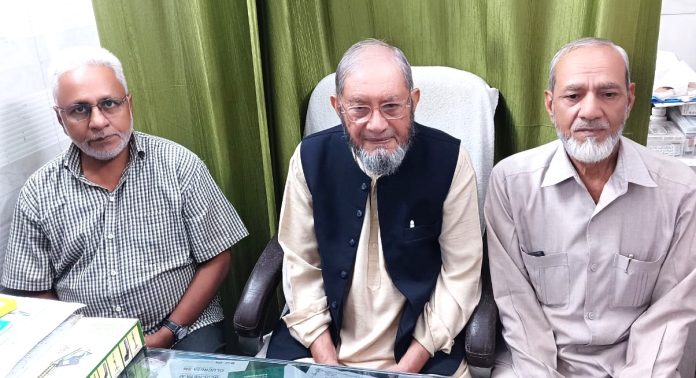


New Delhi: The Markazi Taleemi Board (MTB), Jamaat-e-Islami Hind, has welcomed the recent judgment of the Allahabad High Court (Lucknow Bench) delivered on 16 January 2026, which has reaffirmed the constitutional rights of minority educational institutions and clarified the legal position regarding the functioning of unrecognised madrasas in Uttar Pradesh.
Welcoming the verdict, Mr. Syed Tanveer Ahmed, Secretary MTB, stated that the High Court’s decision has far-reaching and long-term implications for minority education in India. He observed that the judgment strengthens the spirit of Article 30 of the Constitution of India, which guarantees religious and linguistic minorities the right to establish and administer their own educational institutions. He also extended his best wishes to the managements of madrasas across the country.
The Hon’ble Court quashed a government order that had directed the closure and sealing of an unrecognised madrasa, holding that there is no statutory provision empowering authorities to shut down such institutions solely on the ground of lack of recognition. The Court clearly held that minority institutions which do not seek state aid or formal recognition are protected under Article 30(1) of the Constitution.
At the same time, the Court clarified that unrecognised institutions are not entitled to government grants, and students studying in such institutions cannot claim eligibility for board examinations or other state benefits until the institution obtains due recognition.
The judgment thus strikes a careful balance between constitutional protections and regulatory objectives, reinforcing that administrative action such as closure cannot be taken without statutory authority, while also recognising the State’s legitimate role in maintaining standards for recognised institutions.
The MTB views this verdict as a significant reaffirmation of constitutional supremacy, providing much-needed clarity amid ongoing debates on educational governance and minority rights. The decision once again underlines the judiciary’s vital role in safeguarding minority rights while ensuring adherence to the legal framework.