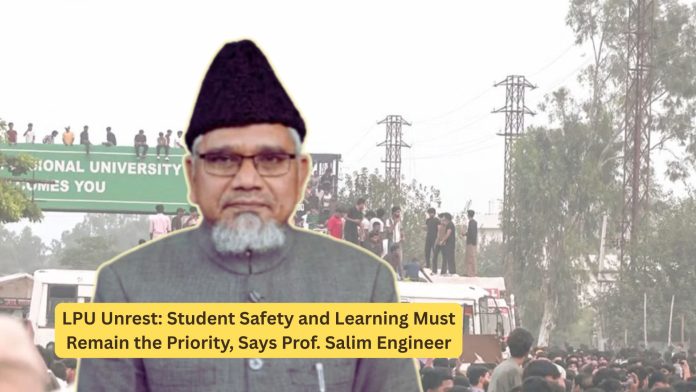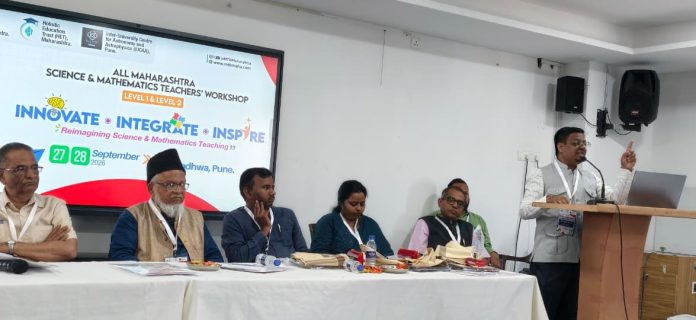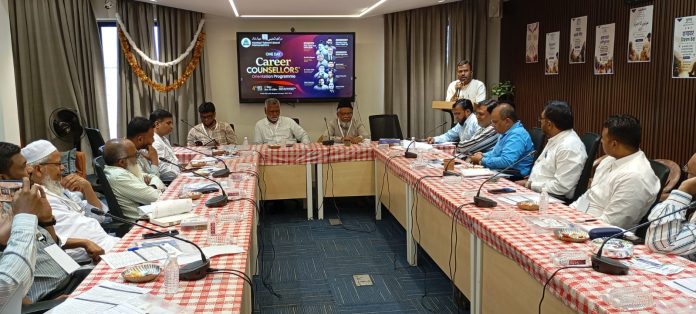

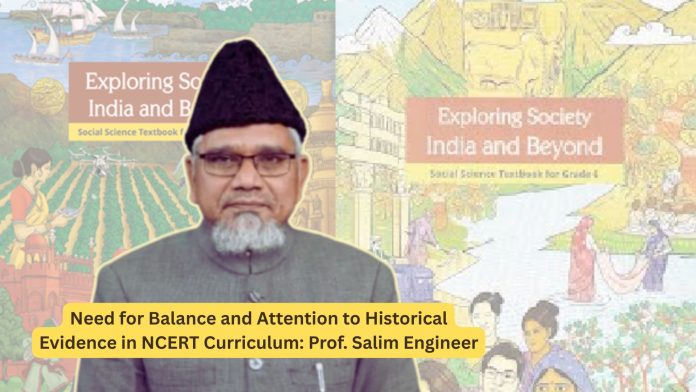
New Delhi: Prof. Salim Engineer, Chairman of the Central Education Board of Jamaat-e-Islami Hind, has expressed concern over the new NCERT Social Science curriculum for Class 9, stating that balance, historical evidence, and a critical and scientific approach should be given fundamental importance in the teaching of history. He said that along with familiarising students with the complexities of the past, it is also essential to help them understand the distinction between historical facts, traditions, beliefs and historical interpretation.
Prof. Salim Engineer said that the previous Class 9 curriculum taught the French Revolution and the Russian Revolution as important events in the making of the modern world. However, in the new curriculum, the section titled “India and the World” has been shifted to Class 10, while greater attention has been given to medieval Indian history in Class 9. The new curriculum includes an important topic titled “Resistance and Resilience (1000 CE to 1700 CE).” He said that the French and Russian Revolutions were major events in human history that deeply influenced global debates on concepts such as liberty, equality, human rights, citizenship, democracy and socialism. If we want our students to become global citizens, they should be familiar with these important historical transformations that played a fundamental role in shaping the modern world.
Drawing attention also to the manner in which the new historical material is presented, he said that the curriculum includes resistance against invaders and conflicts between different powers, along with certain events relating to Sikh history and traditions, including traditional accounts that some rulers, such as Shivaji Maharaj, were given swords by goddesses. Prof. Salim Engineer said that cultural traditions should certainly be part of study, but students should be taught that historical evidence, tradition, belief and historical interpretation are not the same thing. The purpose of teaching history should not be to present any tradition or belief merely as a historical fact, but to develop in students the ability to ask questions, examine evidence and understand different historical perspectives.
He particularly emphasised the need to avoid presenting Sikh-Muslim history merely through the lens of conflict and confrontation. According to him, the history of India also contains numerous aspects of tolerance, mutual understanding, communal harmony, cooperation, cultural exchange and shared experiences. Education should bring out this complexity and diversity of history, rather than encourage different communities to view one another through the lens of conflicts of the past.
Referring to Article 51A(h) of the Constitution of India, Prof. Salim Engineer said that the purpose of education is also to promote scientific temper, humanism, and the spirit of inquiry and reform. History classrooms should serve as a means of broadening children’s horizons, strengthening constitutional values and developing their ability to raise questions. He said that students should understand their own past honestly while also becoming familiar with world history. Along with the positive aspects of history, it is equally important to learn from its mistakes and weaknesses, so that the new generation can play an effective role in building a strong, prosperous, inclusive India that carries everyone along.